Introduction: Why Everyone Talks About Emergency Funds
Let’s be honest.
Life doesn’t always go as planned.
One month everything is normal, and suddenly—
• Medical emergency
• Job loss
• Car repair
• Family expense
This is where an emergency fund becomes your financial superhero 🦸♂️
If you’ve ever asked,
👉 “How much emergency fund should I save?”
You’re in the right place.
Let’s break it down in simple, friendly language.
💡 What Is an Emergency Fund?
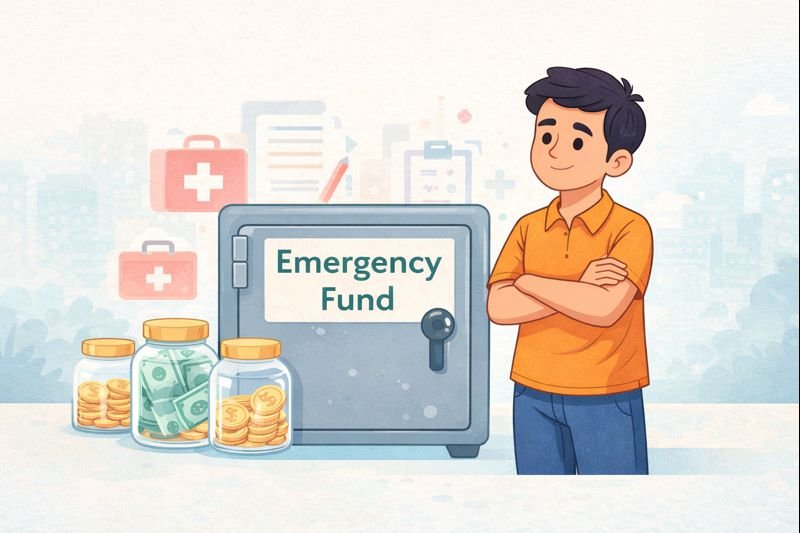
An emergency fund is money kept aside only for unexpected situations.
Think of it like a safety cushion.
It is not for:
❌ Shopping
❌ Travel
❌ Investments
It is only for emergencies.
Example:
If your phone breaks or you lose your job, this fund helps you survive without stress.
🤔 Why Is an Emergency Fund So Important?
Without an emergency fund:
-
You take loans
-
You use credit cards
-
You sell investments at the wrong time
With an emergency fund:
-
You stay calm
-
You protect your savings
-
You avoid debt
👉 It gives mental peace, not just money.
🔐 When Should You Use Your Emergency Fund?
Your emergency fund should be used only in real emergencies.
Examples of valid situations:
-
Medical expenses
-
Sudden job loss
-
Urgent home or vehicle repairs
-
Family emergencies
Avoid using this money for:
-
Shopping or gadgets
-
Travel plans
-
Festival spending
👉 Treat your emergency fund like a financial safety lock.
Once you use it, make sure to rebuild it slowly so you are always prepared for the unexpected.
💰 Emergency Fund: How Much Money Should You Save?
Here’s the simple rule:
✅ Save 3 to 6 months of your monthly expenses
Let’s understand with an example.
Example:
If your monthly expenses are ₹20,000
-
3 months = ₹60,000
-
6 months = ₹1,20,000
👉 Your emergency fund goal should be between ₹60,000 – ₹1,20,000
📊 How to Decide the Right Amount for You
Ask yourself these questions:
1️⃣ Are you salaried or self-employed?
-
Salaried (stable job): 3–4 months
-
Self-employed/freelancer: 6 months or more
2️⃣ Do you have dependents?
More family responsibility = bigger emergency savings
3️⃣ Is your income fixed or variable?
Variable income = higher safety cushion
🏦 Where Should You Keep Your emergency savings?
Your emergency savings should be:
✔ Easy to access
✔ Safe
✔ Not risky
Best options:
-
Savings account
-
Liquid mutual funds
-
Short-term fixed deposits
❌ Avoid:
-
Stocks
-
Crypto
-
Long-term investments
👉 Remember: Safety is more important than returns.
🪜 How to Build an emergency savings (Step-by-Step)
Don’t worry if the amount feels big. Start small.
Step 1: Start with ₹1,000
Yes, even ₹1,000 is okay.
Step 2: Save monthly
Auto-transfer money after salary day.
Step 3: Increase slowly
Bonus, incentives, side income—add them here.
Step 4: Don’t touch it
Use only for real emergencies.
🚫 Common emergency savings Mistakes
Avoid these beginner mistakes:
❌ Mixing it with savings
❌ Investing it in stocks
❌ Using it for shopping
❌ Not rebuilding after using it
👉 Always refill your emergency savings once used.
🔄 What If You Already Have Debt?
Many beginners ask:
“Should I build an emergency fund if I already have loans?”
The simple answer is yes.
Even if you have:
-
Credit card bills
-
Personal loan
-
Education loan
You should still keep a small emergency savings.
👉 Start with ₹25,000–₹50,000 first.
This prevents you from taking more debt during emergencies.
Once this base is ready:
-
Continue paying loans
-
Slowly increase your emergency savings
This balanced approach keeps your financial life stable and stress-free.
🔗 Internal Link Suggestion
You can internally link this post to:
✅ Final Thoughts
An emergency fund is not about fear.
It’s about freedom and confidence.
You may not control emergencies,
but you can control your preparation.
👉 Start today. Even a small step matters.
Your future self will thank you. 😊