Income Tax Basics Every Indian Must Know
Income Tax Basics in India are important for every earning Indian, whether you are a salaried employee, freelancer, or business owner. Many people feel income tax is confusing, but once you understand the basics, it becomes very simple and stress-free.
If the word income tax makes you feel confused or stressed, don’t worry—you are not alone. Many Indians feel the same way, especially beginners. But once you understand the basic concepts, income tax becomes very simple.
In this article, we’ll explain income tax basics in India using easy, conversational language—just like a friend explaining it to you.
What Is Income Tax?
Income tax is the tax you pay to the government on the money you earn in a year. This income can come from:
-
Salary
-
Business or freelancing
-
Interest from bank FD or savings account
-
Rent from property
-
Profits from shares or mutual funds
The government uses this tax money to build roads, hospitals, schools, railways, and run the country.
Who Should Learn Income Tax Basics in India?
You need to pay income tax if your total yearly income is more than the basic exemption limit.
Current Basic Exemption Limit (FY 2025–26 – Old Regime)
-
Below 60 years: ₹2.5 lakh
-
Senior citizens (60–80): ₹3 lakh
-
Super senior citizens (80+): ₹5 lakh
👉 If your income is below this limit, you don’t need to pay tax, but filing ITR is still a good habit.
Income Tax Basics in India Explained Simply
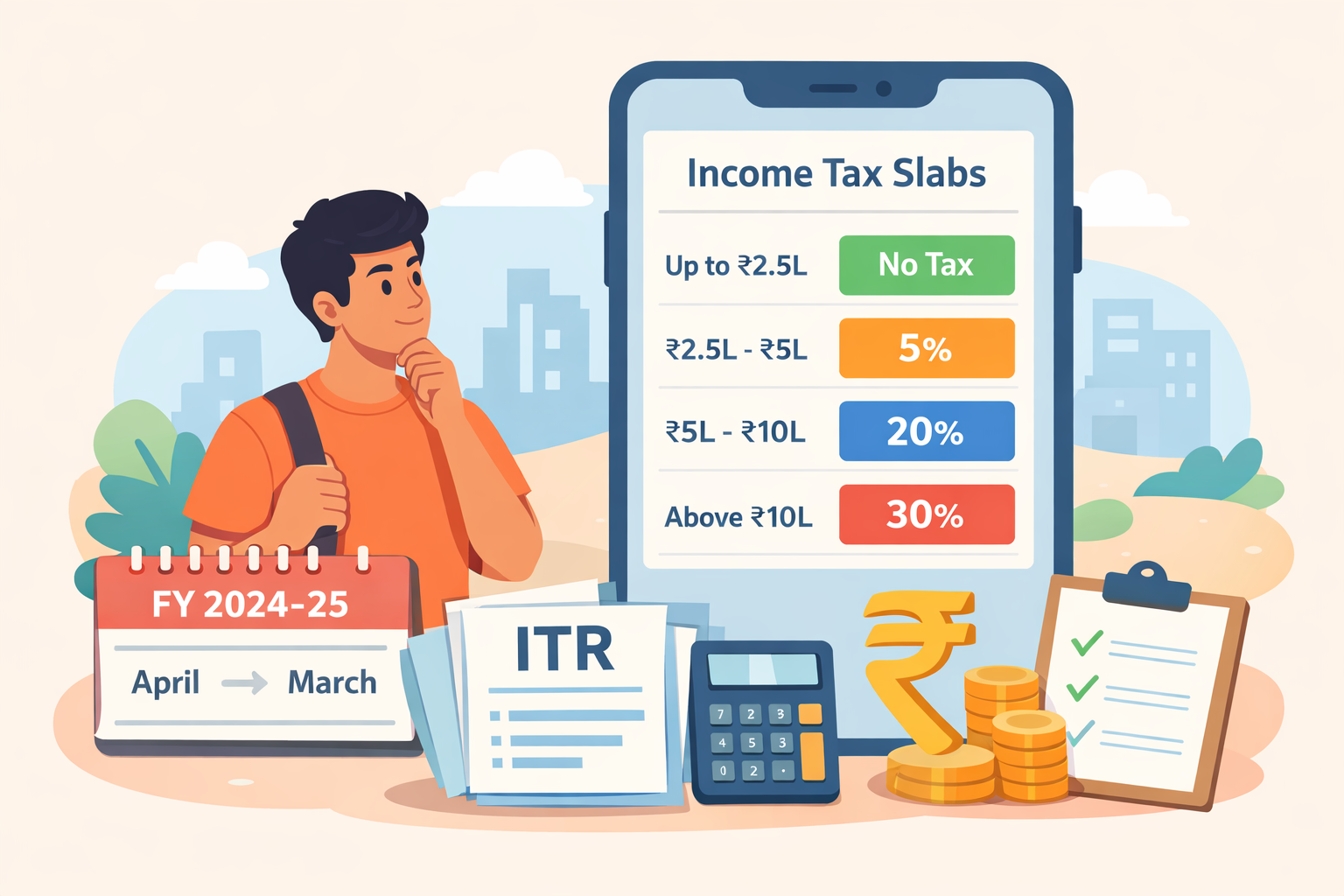
Income tax in India works on a slab system. This means different portions of your income are taxed at different rates.
Example (Old Tax Regime – Simplified):
-
Income up to ₹2.5 lakh → No tax
-
₹2.5L – ₹5L → 5%
-
₹5L – ₹10L → 20%
-
Above ₹10L → 30%
💡 Important: Tax is calculated step by step, not on your entire income at one rate.
What Is the Financial Year?
This is very important.
-
Financial Year (FY): 1 April to 31 March
-
Assessment Year (AY): The year after FY when you file tax
📌 Example:
Income earned from April 2024 to March 2025 → FY 2024–25
Tax filed in 2025–26 → AY 2025–26
What Is ITR (Income Tax Return)?
ITR is a form where you tell the government:
-
How much you earned
-
How much tax you paid
-
How much tax you still owe or refund you want
Even if no tax is payable, filing ITR helps in:
-
Loan approval
-
Visa applications
-
Financial record proof
Income Tax Slabs in India for Beginners
Common Income Tax Deductions (Tax-Saving Options)
Here’s where you can save tax legally 👇
Section 80C (Up to ₹1.5 lakh)
-
EPF / PPF
-
ELSS Mutual Funds
-
Life Insurance Premium
-
Tuition Fees
Other Popular Deductions
-
80D: Health insurance premium
-
80TTA: Savings account interest (₹10,000)
-
Home loan interest: Under Section 24
💡 Using deductions can reduce your taxable income and tax amount.
Old vs New Tax Regime in India (Basic Comparison)
-
Old Regime:
-
More deductions
-
Slightly higher tax rates
-
-
New Regime:
-
Lower tax rates
-
Very few deductions
-
👉 Salaried beginners usually benefit from new regime, but tax-saving investors may prefer old regime.
How to Pay Income Tax?
Tax is paid through:
-
TDS (Tax Deducted at Source) – deducted by employer or bank
-
Advance Tax – for freelancers/business
-
Self-Assessment Tax – paid while filing ITR
Common Mistakes Beginners Make
❌ Not filing ITR
❌ Ignoring bank interest income
❌ Choosing wrong tax regime
❌ Missing deduction claims
Avoid these, and tax becomes stress-free.
Why Learning Income Tax Basics in India Early Is Important
Understanding income tax basics in India at an early stage helps you make better money decisions. When you know how tax works, you can plan savings, investments, and expenses wisely. Many people lose money every year just because they don’t understand tax rules or miss deadlines.
Learning income tax basics in India also builds financial confidence. You don’t have to depend on others for filing returns or understanding salary slips. Over time, this knowledge helps you save more, avoid penalties, and stay stress-free with money matters.
Final Thoughts
Income tax is not scary once you understand the basics. Start small—know your income, check deductions, and file ITR on time. The earlier you learn, the more confident you become with money.
👉 If you are new to finance, also read:
[How to Save Money from Your Monthly Salary]
For official tax updates, you can also refer to the Income Tax Department of India website.
(Link it to incometax.gov.in — do follow)