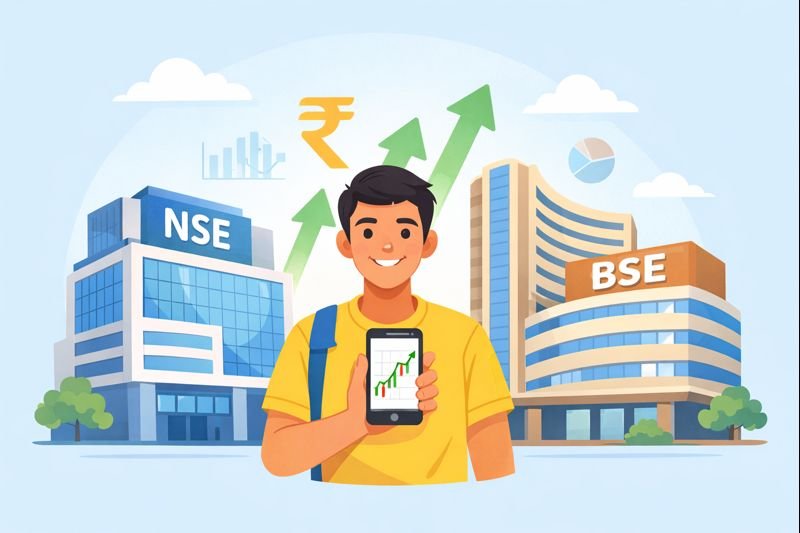
What Is NSE and BSE? Explained Simply
If you are new to the stock market, you’ve probably heard people say,
👉 “This stock is listed on NSE” or
👉 “Check the price on BSE”
But what do NSE and BSE actually mean? And why does India have two stock exchanges?
Don’t worry—let’s break it down in the simplest way possible, like a friendly conversation ☕.
What Is NSE and BSE for Beginners?
NSE and BSE play a very important role in India’s financial system. For beginners, understanding what NSE and BSE are helps build confidence before investing money. Once you know how stock exchanges work, you can easily move on to learning about shares, mutual funds, and long-term investing. Starting with strong basics always makes your investment journey safer and smarter.
🏛️ What Is a Stock Exchange? (Quick Basics)
A stock exchange is like a marketplace—but instead of vegetables or clothes, people buy and sell shares of companies.
Companies come to a stock exchange to:
-
Raise money
-
Allow people like you and me to become part-owners (shareholders)
In India, the two main stock exchanges are:
-
BSE (Bombay Stock Exchange)
-
NSE (National Stock Exchange)
📍 What Is BSE (Bombay Stock Exchange)?
BSE is the oldest stock exchange in Asia.
🔹 Key Facts About BSE:
-
Started in 1875
-
Located in Mumbai
-
Known for the Sensex index
-
More than 5,000 companies are listed
🧠 What Is Sensex?
Sensex is an index that shows the performance of 30 large, well-known companies listed on BSE.
If Sensex goes up, it usually means big companies are doing well.
👉 Example companies: Reliance, TCS, HDFC Bank
📍 What Is NSE (National Stock Exchange)?
NSE is India’s largest stock exchange by trading volume.
🔹 Key Facts About NSE:
-
Started in 1992
-
Fully electronic from day one
-
Known for the Nifty 50 index
-
Very popular among traders
🧠 What Is Nifty 50?
Nifty 50 tracks the performance of 50 large companies listed on NSE.
It gives a quick idea of how the overall market is performing.
🔄Difference Between NSE and BSE in India
| Feature | NSE | BSE |
|---|---|---|
| Full Form | National Stock Exchange | Bombay Stock Exchange |
| Started In | 1992 | 1875 |
| Famous Index | Nifty 50 | Sensex |
| Trading Volume | Very High | High |
| Technology | Fully electronic | Modernized later |
| Popular With | Traders & investors | Long-term investors |
👉 Important: Prices on NSE and BSE are almost the same due to market competition.
❓ Can One Company Be Listed on Both NSE and BSE?
Yes! ✅
Most big companies in India are listed on both NSE and BSE.
For example:
-
Infosys
-
Reliance Industries
-
ICICI Bank
You can buy or sell their shares on either exchange using your trading app.
📱 Do You Need Separate Accounts for NSE and BSE?
No 😊
You only need:
-
One Demat account
-
One Trading account
Your broker (like Zerodha, Groww, Upstox) automatically connects you to both NSE and BSE.
🤔 Which Is Better for Beginners: NSE or BSE?
For beginners, both are equally safe and regulated by SEBI.
However:
-
NSE is more popular for trading (options, futures, intraday)
-
BSE is great for long-term investing and smaller companies
👉 As a beginner, you don’t need to choose. Your broker handles it for you.
🧾 NSE & BSE Are Regulated by SEBI
Both exchanges are regulated by SEBI (Securities and Exchange Board of India), which protects investors and ensures fair trading.
So yes—you’re investing in a secure and well-regulated system.
🔗 Internal Link Suggestion
👉 How to Start Investing in Stocks with ₹1,000
👉 Common Stock Market Terms Every Beginner Should Know
✅ Final Thoughts
In simple words:
-
BSE = India’s oldest stock exchange (Sensex)
-
NSE = India’s largest and most active exchange (Nifty)
Both work together to keep India’s stock market strong and transparent.
If you’re just starting your investment journey, understanding NSE and BSE is your first smart step