Introduction
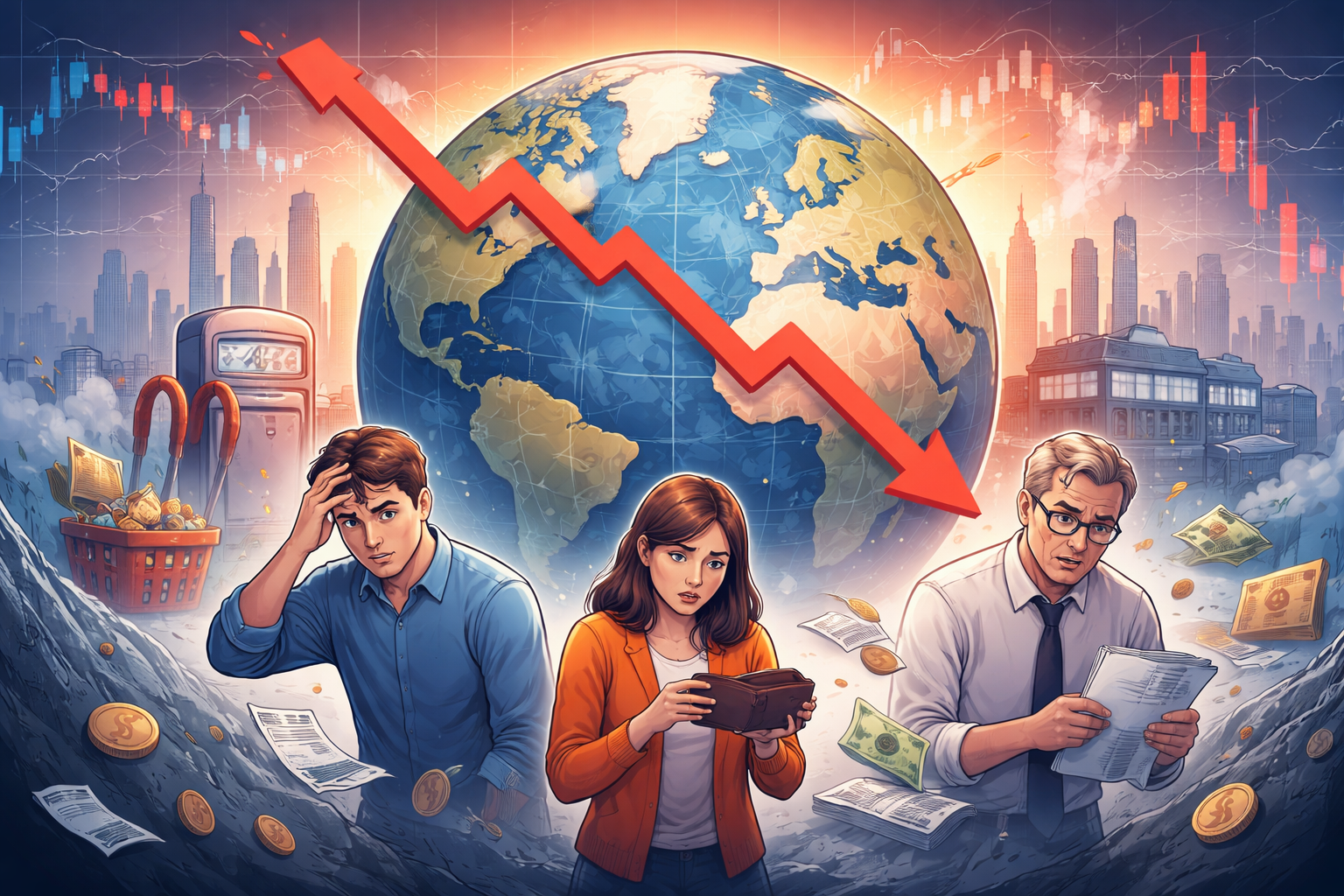
The global economy feels broken to many people today. Even when news reports say the economy is growing, millions of people still struggle with rising prices, expensive housing, and uncertain jobs.
In this article, we’ll have a simple conversation about why the global economy feels broken and explore the economic forces and policies behind this feeling.
If you talk to people today—friends, coworkers, or family—you will often hear the same sentence:
“The economy feels broken.”
Even when headlines report economic growth, many people still feel financially stressed. Prices seem higher, housing feels unaffordable, and job security often feels uncertain.
So what is actually happening?
In this article, let’s have a simple conversation about the global economy. We will explore why people feel this way by looking at four major forces:
-
Inflation and rising costs
-
Inequality and wealth concentration
-
Changes in globalization
-
Policy challenges governments face
By the end, you will understand why the global economy feels unstable—and what policies might help fix it.
Many experts say the global economy feels broken because economic growth no longer improves everyday living standards as it once did.
1. Inflation: Why Everything Feels More Expensive
One of the biggest reasons people feel economic stress is inflation.
Inflation simply means prices are rising over time. When inflation rises faster than incomes, people feel poorer even if they are earning the same salary.
Think about everyday items:
-
Groceries
-
Rent
-
Fuel
-
Education
-
Healthcare
In many countries, these essentials have become significantly more expensive in recent years.
During the pandemic, governments and central banks pumped huge amounts of money into the economy to prevent economic collapse. This helped avoid a deep recession, but it also contributed to rising prices.
At the same time, supply chains were disrupted. Factories closed, shipping slowed, and shortages appeared across industries. When supply falls but demand remains strong, prices rise.
This combination created the inflation surge that people still feel today.
Even when official inflation numbers fall, the higher prices remain. That is why the economy still feels expensive.
2. Housing Crisis: Why Homes Feel Out of Reach
Another major reason the economy feels broken is the housing affordability crisis.
Across many countries, housing prices have increased much faster than incomes.
Several factors explain this:
-
Limited housing supply
-
Growing urban populations
-
Real estate investment demand
-
Zoning restrictions in cities
When housing supply does not grow fast enough, prices naturally increase.
For young people especially, this creates frustration. Previous generations could buy homes with a smaller share of their income, but today many people must spend a large portion of their salary just on rent.
Housing policy plays a big role here. Governments can influence housing markets through:
-
Zoning rules
-
Land use regulations
-
Affordable housing programs
-
Infrastructure investments
Without policy changes that increase housing supply, the affordability problem may continue.
3. Inequality: Growth That Doesn’t Reach Everyone
Another important reason the global economy feels broken is economic inequality.
In many countries, economic growth has occurred—but the benefits are not evenly distributed.
Over the past few decades:
-
Wealth has concentrated among the richest households
-
Asset prices like stocks and real estate have increased
-
Wage growth for many workers has remained slow
When economic gains go mostly to the top of the income distribution, the average person may feel left behind.
For example, stock markets may reach record highs, but many people do not own significant stocks. Instead, they experience rising costs of living without seeing the benefits of financial market growth.
This creates a perception that the economy works well for some groups—but not for everyone.
4. Globalization Is Changing
For decades, globalization helped drive economic growth.
Companies moved production across borders, trade expanded rapidly, and consumers benefited from cheaper goods.
However, globalization is now entering a new phase.
Today we see:
-
Trade tensions between major economies
-
Supply chain restructuring
-
Economic nationalism
-
Industrial policy returning
Governments are increasingly prioritizing economic security over pure efficiency.
For example, many countries now want to produce key technologies—such as semiconductors or batteries—domestically instead of relying heavily on imports.
While this shift can improve resilience, it may also raise costs because global supply chains become less efficient.
That is another reason the economy can feel more expensive.
5. Technology and Job Uncertainty
Technology is also transforming the global economy.
Automation, artificial intelligence, and digital platforms are changing the way people work.
These changes bring benefits:
-
Higher productivity
-
New industries
-
Improved services
But they also create uncertainty.
Some workers worry that automation may replace certain jobs. Others face unstable gig work instead of traditional employment.
Economic transitions often create short-term disruption before long-term benefits appear. During that transition, people may feel uncertain about the future.
6. Why Policy Solutions Are Difficult
If these problems are clear, why are they so hard to fix?
The answer is that economic policy involves trade-offs.
For example:
-
Raising interest rates reduces inflation but can slow economic growth.
-
Increasing government spending supports households but can increase public debt.
-
Protecting domestic industries may create jobs but raise prices for consumers.
Policymakers must balance competing priorities.
This complexity is why economic reforms often move slowly—even when problems are widely recognized.
7. What Could Improve the Global Economy?
Although challenges exist, there are also potential solutions.
Several policy approaches could help improve economic stability:
1. Investing in Housing Supply
Increasing housing construction can improve affordability and reduce rent pressure.
2. Strengthening Social Safety Nets
Programs such as healthcare support, unemployment insurance, and education funding help reduce economic insecurity.
3. Supporting Innovation
Investment in technology, research, and infrastructure can boost long-term economic growth.
4. Smarter Global Cooperation
Even as globalization evolves, international cooperation remains important for trade, climate policy, and financial stability.
When housing, healthcare, and education become expensive, the global economy feels broken for young workers and middle-income families.
Final Thoughts
The global economy is not actually “broken” in a literal sense. Economic systems are still functioning and producing growth.
However, many people feel disconnected from that growth.
When wages stagnate, housing becomes unaffordable, and prices rise faster than incomes, it creates the perception that the system is not working.
Understanding these forces helps us have a better conversation about economic policy and possible reforms.
The future of the global economy will depend on how governments, businesses, and societies respond to these challenges.
Until governments address inflation, inequality, and housing shortages, the global economy will continue to feel broken for many people.
Internal Link
If you want to understand one of the biggest drivers of economic stress today, read our guide:
What is Personal Finance and Why It Matters
According to the International Monetary Fund (IMF), global inflation surged after the pandemic due to supply chain disruptions.
The World Bank reports that rising inequality remains a major global challenge.
https://www.worldbank.org
1 thought on “7 Economic Warning Signs: Why the Global Economy Feels Broken”